McKenzie River Communities


Cedar Flat

milepost 10.5
The gateway to the McKenzie Valley. This area was once home to early McKenzie pioneer Samuel Sparks, who also homesteaded in the Blue River area, 30 miles to the east. In the late 1800’s this thriving community on the McKenzie’s south bank was sited in the hills at the end of Cedar Flat Road. It is located less than one mile from the first historic  river crossing, Hendricks Ferry, now Hendricks Bridge. The Deli located here is the historic location of a former stage stop in the early 1900’s. Kintigh’s Tree Farm is located on Cedar Flat Road. The Kintigh family farm was chosen in 1995 to supply the Christmas tree for the White House in D.C. Their rhododrendron gardens are open to the public for tours in the spring. Groceries, gas, deli foods, drive-through espresso, and auto repairs may be obtained in Cedar Flat.
Hendricks Bridge  milepost 11.4

Built in 1908 it was the longest covered bridge in Oregon. Although reconstructed twice, it was never covered again. It sits to the south of the old Hendricks river ferry site, which was run by another pioneer family in the valley. 

Hendricks Wayside Park

This property was donated to the state in 1932 but is now a Lane County Park. It includes 17 acres of lovely riverside land with a boat landing, picnic sites, a wonderful, roped-off swimming area and flush toilets. This park is a day-use only area and is part of a fee system.


Walterville

milepost 12.5

This community was named after Walter Millican, son of a pioneer family whose descendents have lived in the area since the 1860’s. The Millican Century Farm is located at mp 13 and is open for viewing by appointment only. A member of the Millican family runs Triangle 5 Ranch will offers historic horseback tours through the foothills above the Century Farm. Another historic building, the George Millican Memorial Hall, is at the east end of Camp Creek Road, behind the Walterville Shopping Center. Each year on the first Saturday in September the Walterville Community Fair is held on this site. The building which houses the Walterville Feed & Tackle store is the first store located in this area in the early 1900’s, with the post office box of #1. Walterville Pond, just east of the center on the EWEB canal, is a good spot to catch bass. The Presbyterian church is located near the canal. This community is the home of the only shopping center in the Valley - it includes a restaurant, supermarket, feed abd tackle store, post office,beauty shop and a fishing fly shop. In old town Walterville, just to the southeast of the shopping center has historic farm buildings still standing. The large wooden barn was once home to another feed store which operated in the late 1800’s Just to the west of the center, the McKenzie Fire Station is located on Millican Drive.

Camp Creek Road runs behind the shopping center to the southwest. This rural roadway will take you back to Springfield and I-5. Bellinger Boat Landing is located on this road. Camp Creek flows into the McKenzie River between Thurston and Walterville. There are two stories about how the area was named. One story is pioneers found an Indian camp near the stream, called Chaston by the Indians. Another story says the stream was named because a party of pioneers chasing Indian stock thieves camped there. Camp Creek post office was established July 12, 1871, with William Pattison, Jr. first postmaster. This office was closed to Springfield, Sept. 15, 1922. The Fountain Century Farm is located on Camp Creek and the historic EWEB power plant still stands next to a refurbished 1800’s farm house.

Deerhorn Park is located on Bridge Street about a half mile off Hwy 126 at milepost 18. Take Holden Creek Lane to the south, cross over the bridge to Bridge Street, the park is on the left. Facilities include a boat dock, toilets, picnic tables, and a great swimming hole. Continuing on Bridge Street you will find a 9 hole golf course. If you follow Madrone Street to where it intersects with Deerhorn to the west there is a refurbished antique railroad car.


Leaburg Power Plant located on the north side of the river at milepost 19.5. It was constructed in 1929 and is owned and operated by Eugene Water & Electric Board. It was the utility’s second of three hydro projects in the Valley.


Leaburg

milepost 20.1

Named for the first postmaster Leander Cruzan, in 1877. A name change to Jim Town happened in the early 1900’s - in honor of a local store owner. The Leaburg school was built in 1923. A public library occupies part of the old schoolhouse today. Besides the library this area hosts a community center/gym (with kitchen). This community is also home to a veterinarian, auto repair shop, gas/grocery store, fire station, and two art galleries. Further east along the highway you will find filbert orchards, also known as hazelnuts.

McKenzie River Salmon Hatchery is a state run facility with guided tours by appointment. The hatchery raises salmon from eggs until they are about six inches long. These “smolts” are released to travel to the ocean and return when they mature in about 3 to 4 years.

At the east end of Greenwood Drive, stands the Ward/Currie house, now owned by the Bischoff family. It served as a stage stop for many years. The Greenwood Pioneer Cemetary is located on Greenwood Drive as well. There is also a public boat landing on Greenwood Drive.

Leaburg Dam offers views of salmon and steelhead climbing a fish ladder. Leaburg Lake is about 40 acres and motorized craft are allowed. The Leaburg Trout Hatchery and EWEB Water Board Park are located on the south side of the river. The trout hatchery is open to the public and features ponds with albino cutthroat, Columbia River sturgeon and Atlantic salmon, some weighing up to 20 pounds. The hatchery annually grows 750,000 fish, mostly rainbow trout, to be released in Oregon rivers. The 55 acre EWEB Park has facilities for groups up to 600 people (reservations required). It is only open during daylight hours and features picnic sites overlooking the McKenzie River, free covered electric cooking centers, outdoor firewood grills, a softball field, volleyball court, horseshoe pits, boat landing, trails, and swings for children.

Historic Old McKenzie Hatchery Originally built near the turn of the century, the facilities were used by the state to grow trout and salmon until the 1950’s. Many original structures are still on the property. The main house was built in the early 1900’s for the hatchery superintendent. A number of local groups and government agencies joined together to revitalize the property, which is now part of the Lane County Park Department.    

Goodpasture

Covered Bridge

Built in 1938 it is 165 feet long, making it the second longest in Lane County. It was named for Benjamin Franklin Goodpasture, a settler here in the early 1900’s. The family members still grow filberts on the homestead.


Vida

milepost 26.9

Named for the daughter of the first postmaster, Francis Pepiot, who settled here in 1868. The Minney family moved to the area in 1897 and purchased the Gate Creek Ranch and stage stop (red barn to the east of the community) from the Pepiots. Stage coaches would change horses here before continuing on to Belknap Springs, 32 miles to the east. From 1908-11 a state salmon hatchery was located on Gate Creek. The eggs came from fish which were caught by weirs placed across the entire river near where Leaburg Dam is now. After the eggs were harvested many of the salmon remains were given to Indians who came from Eastern Oregon, setting up camp and drying racks on an island in the river. The community now offers a dinner house, gas & groceries, real estate offices, cafe, post office and fire station.

Thomson Lane, community center and Helfrich boat landing. An historic swinging bridge is located near the boat landing. It is now on private property but leads to the old Thomson homestead, once home of the historic Thomson Fishing Lodge.

Ben & Kay Dorris State Park: Donated to the state by Ben & Klysta Dorris in 1942, it is now maintained by Lane County Parks. Dorris was president of the Blue River Mining Company in the 1890’s. The Rock House, a rock overhang, where it is said pioneer road builder John Templeton Craig often stayed, is located about .5 mile east of the park entrance. If you go exploring be aware the grade is very steep to this point. Marten Rapids, best known of McKenzie River rapids, is also within the boundaries of the park. The rapids are named after T.M. Marten, state legislator, old civil war veteran and post master at Gate Creek in 1874. The park is day-use only, covers 79 acres, and has 10 picnic sites, a boat landing and public toilets. Drinking water is not available.

Rennie Boat Landing. A wildlife viewing platform is located on this spot.

Silver Creek Boat Landing


Nimrod

milepost 34.5

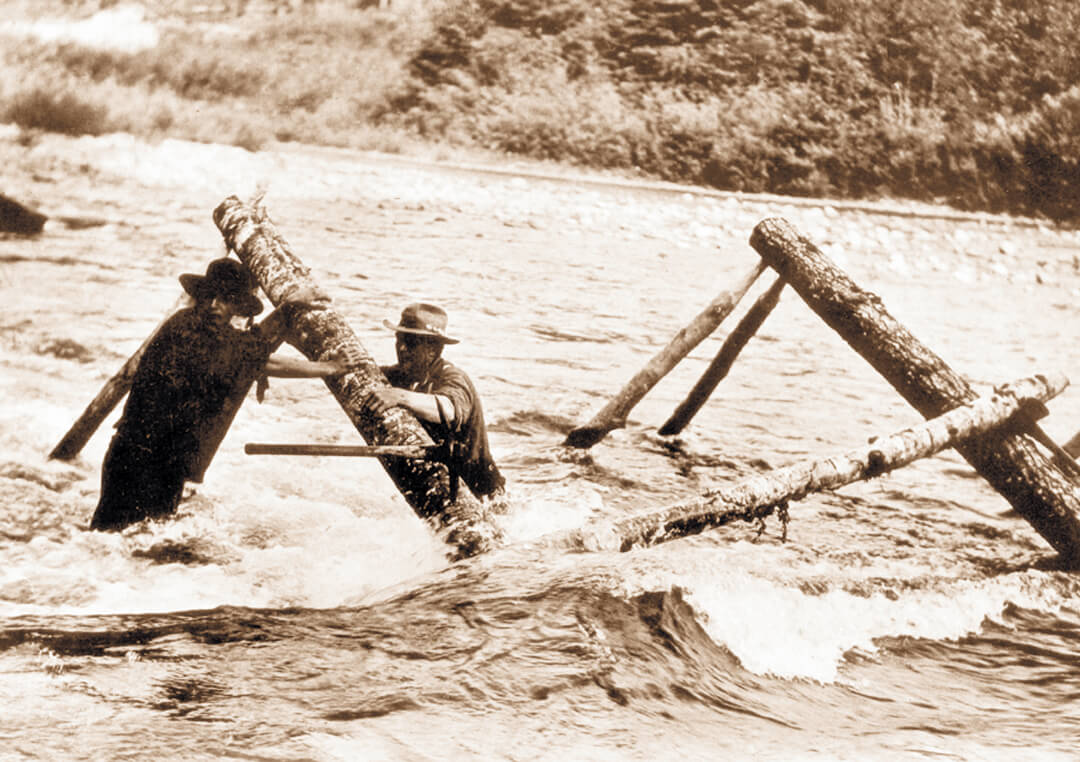
A small river community that was famous in the days of the White Water Parade. Thousands of folks were fed a picnic lunch nearby on “West’s Bar.” This is a beautiful, sandy area located on property once owned by the West family. John West was one of the first members of the McKenzie River Guides Association. The first White Water Parade was unofficially held in April of 1938. A small group of McKenzie River guides and their wives floated down from Belknap Springs for a preview of the river before opening day of fishing season. By 1962 over 300 boaters were part of the parade. Invited guests included state dignitaries, radio and TV personnel, magazine and newspaper writers and other publicity agents. The route was 20 miles long. Crowds of up to 30,000 people lined the river banks. In 1970 the annual event ended. Unsafe craft and the recklessness of a few participants were cited. This community is home to two bed & breakfast inns, the Nimrod Fire Station and Eastern Lane County Fire Protection District.

Eagle Rock is a huge monolith located on the south side of the river. Lane County Parks owns property directly across the river from Eagle Rock, but the driveway to the site is extremely difficult to enter and navigate.

Howard Morton County Parkis a beautiful little rest and picnic area located on the McKenzie River. It has four picnic tables. As the entrance to the park is hard to negotiate it is best to enter when traveling westward instead of eastward.


Finn Rock

milepost 38.3

Named after Ben Finn, an early settler known as the “biggest liar on the McKenzie River.” One story goes he was having dinner at a friend’s house when two strangers came to the door and were invited in to join the others at the table. Ben began boasting about having killed 24 deer, 3 cougars and 6 bear the day before. One of the strangers spoke up and said, “Do you know who I am?” Ben declared no, he did not. “Well,” said the stranger, “I’m the new game warden.” “Well,” said Ben, “I’m the biggest liar on the McKenzie.” In other stories Ben presented a good case about how he was the prototype for Mark Twain’s Huck Finn. The area near the rock is now a great place to stop for a picnic. There is easy access to the river and a cafe is located here. The cafe can be accessed from the river. Another boat landing is located on the south side of the river.

Blue River

milepost 41.3

A community nestled beside a river of the same name. It was settled in the 1800’s by the Sparks family. In 1863, gold was discovered in the area and the Blue River Mining District was established. At one time more than 250 men were working the area. In 1900 Samuel Sparks and his sons laid out the town of Blue River as part of 320 acres they had acquired. By 1912 gold mining activity had virtually stopped but records show the Lucky Boy Mine had extracted more than $1 million from the area. The old hotel, located on Blue River Drive is on the Historic National Register. Now Blue River is home to McKenzie School District, Blue River Park,  a library, liquor shop, a resort,  an auto repair shop, medical clinic, boat landing, fire department, church, post office, and the Blue River Reservoir. There is a great viewpoint and hiking area from the top of the dam on Blue River Road. Be sure and stop in at the ranger station for info on the area’s attractions and fees and permits for camping and trail head parking.

Blue River Road #15:Gateway to the beginning of a recreational wonderland. There is a great campground at Mona, north end of Blue River Reservoir. The H.J. Andrews Experimental Forest, one of 15 major ecosystem research sites in the United States, is nearby. Road #15 also leads to Wolf Rock, reputed to be the largest monolith in Oregon and the third largest in the world. It rises from an elevation of less than 3,600 feet at the base to over 4,500 feet. Another feature of this area is the 1.5 mile Lookout Creek Old-growth Trail, which provides hikers with a classic old-growth experience.

Aufderheide Drive: One of the McKenzie’s two National Scenic By Ways. This road leads the traveler through some of the most spectacular countryside imaginable. (Be sure and pick up the free-for-loan audio cassette from the Blue River Ranger District for a mile by mile description of this unique roadway). The .5 mile Delta Old- Growth Nature Trail features interpretive displays and some 500 year old giants nearly 250 feet tall. The Forest Service gives free Nature Talks! here from July through August.

Be sure to stop at the viewpoint of 452 foot Cougar Dam, which was built in 1964 and is a rock filled structure over 1,500 feet long. Further along is Terwilliger Hot Springs, a very popular spot in the summer months. Be aware that some bathers in this area will be naked while enjoying one of the five pools.

There are parking, camping, and springs user fees for this area. After crossing the West End Bridge you travel past the French Pete Wilderness Addition. Permits are required to visit the wilderness and can be obtained at the ranger stations. In this area are many beautiful campgrounds, hiking trails and scenic vistas as the road winds its way up to Box Canyon Guard Station. Continuing on the road eventually leads to the cities of West Fir and Oakridge.


Rainbow

milepost 47.1

McKenzie River Drive travels along the north bank of the river through the community of Rainbow. Historic Holiday Farm, once a stage stop for travelers, is located here. It is also the home of the Belknap covered bridge, originally built in 1890 and rebuilt four times since then. It was completely reconstructed after it was washed out in the 1964 flood. Some of the Belknap family settled in this area, long after Rollin Belknap bought Belknap Springs around 1871. King Castle Trail can be accessed from King Road (across the covered bridge). It’s a steep 2 mile climb with many switch-backs, but well worth the effort. It leads to the top of Castle Rock (a former fire lookout) and a fantastic overview of the valley. The community of Rainbow is comprised of a resort, two restaurant and a deli, 2 RV parks, a motel, country store/gas/gift shop (last chance to buy gasoline for 60 miles), a community center, a conference center/basketball academy and a 18 hole golf course. fantastic view of the Three Sisters Mountains from the green


McKenzie Bridge

milepost 51.1

Early settlers called McKenzie Bridge Strawberry Prairie. Lew Powers operated the area’s first store. Horse Creek Road leads up into Wapiti country (an Indian word meaning elk), leading to hiking trails as well as some magnificent views of the “High Country.” The community of McKenzie Bridge includes a country store, numerous resorts, two churches, a retreat center, fire station, realtors, a deli/coffee shop, and professional river guides.


Jenny B. Harris Wayside sits on four acres and has trail access to the river. This is a day-use only park with picnic sites and public toilets.


McKenzie River National Scenic Trailhead. This 26-mile trail passes through the gorgeous Tamolitch Valley and winds its way up and around Clear Lake to Fish Lake. A boat landing is at the trailhead.


McKenzie River Ranger Station was constructed in 1934


© McKenzie River Chamber of Commerce
Powered by Wild Apricot Membership Software